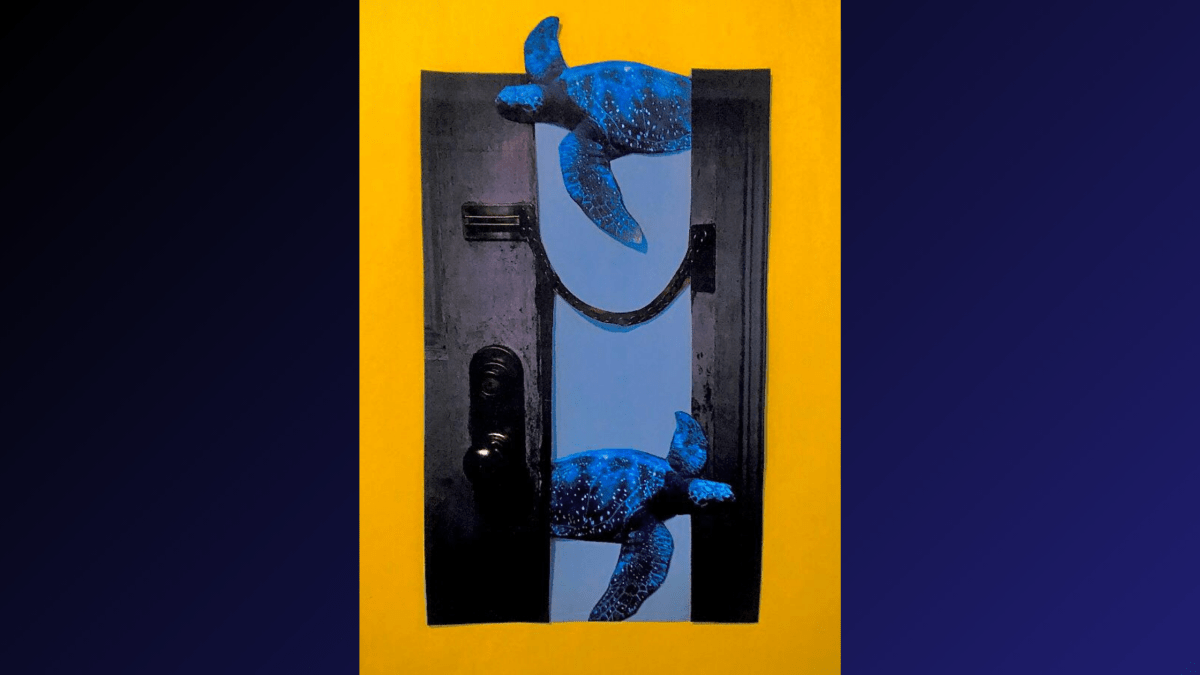
Sunshine Girl
Sunshine Girl
By Mia Dalia
The closet smelled musty. All motel closets smelled the same no matter what was in them, even if it was a pile of freshly laundered clothes, an old suitcase, and a young girl named Lotty.
Lotty made herself comfortable in one corner, creating a nest out of the clothes. The ratty old bedspread from the motel bed made a makeshift tent that absorbed the brightness of her flashlight. Lotty had her plush turtle toy and her books for company, and she could be very still for a very long time. Like a turtle.
Lotty first saw turtles a few years ago, when she and Momma stayed in a motel by the water. She could no longer recall the name of the motel or the town or the river, but she never forgot the turtles. The way they perched on a fallen tree branch, a family of them, all three different sizes, so perfectly still and content, sunning themselves. The way the water around them rippled ever so gently and caught the sunlight, shining and sparkling like tiny mirrors.
The river water surrounding them was dirty with mud from a recent storm and man-made debris, but the turtle family was on their own private island amid all of it, perfectly ensconced in their own world, impervious to ugliness and danger.
Lotty thought that’s what it must feel like to have a real family. All she had was Momma, who had never made her feel that way.
She remembered telling Momma about the turtles that evening and Momma scoffing at her whimsy through a cloud of cigarette smoke. “I’m like them turtles of yours, you know.”
Lotty couldn’t possibly see how that could be true, but later, when she learned her letters and read book after book about turtles, she found out about negligible senescence. It sounded magical, she had to look up both words. Turned out it was just a fancy phrase for not aging. Turtles didn’t get old and decrepit and die. Unless someone did something to them, they stayed the same.
Like Momma.
Momma always looked the same and Lotty got older every year.
“You got your daddy in ya,” Momma said. “You ain’t like me. Don’t know how that worked out. Now go buy me mah smokes, sunshine girl.”
Sunshine girl ought to sound nice coming off someone’s lips, but her momma made it sound mean. Sun burned Momma’s skin. During the day, Momma stayed in and slept and smoked and watched her soaps, while Lotty did errands and whatever else she wanted and thought she could get away with. People watching and book stealing were her favorite activities. She only held on to the books she loved, though, the ones she could read over and over again. The rest she made sure to clandestinely return to a used bookstore or a library in the next town. That way, she reasoned, the books got to travel—tumbleweeds, just like her. But that was daytime. At night, well … that was a different story altogether.
Lotty was supposed to wear earplugs while in the closet, but they never cut out the sound entirely. Sometimes, she’d lick her fingers and stick them in her ears instead and that worked better though it made her arms tired.
And sometimes, the noise got through no matter what and, against her better judgment, she’d tilt the wooden slats of the door—all motel rooms seemed to have those—with her fingers and look out.
Early on, Lotty learned that people came in certain types. There were the night motel clerks, forever tired and pale; the diner waitresses fake smiling through cheap makeup and smelling of smoke and fries; the bookstore people and librarians, always thin and serious with their glasses and cardigans.
Places changed—Lotty and her momma were always on the go—but faces remained. There was a certain kind of comfort in that.
The men Momma brought home were all of a certain type too: middle-aged, saggy, with a wet hungry glint in their eyes. By the time Momma was done with them, they were nothing but a bag of bones. Bones encased in bloodless, meatless sacks of skin.
Lotty had seen what Momma did to make them that way but didn’t have the words to describe it. She’d only ever seen animals feed like that on TV—a mindless, voracious, all-devouring appetite that had to be satisfied no matter what.
Afterward, Momma was always at her nicest. Her dark eyes hooded and her smile all lazy and her expression distant and floaty. Sometimes, she’d buy Lotty pizza, and they’d watch late-night movies together. Sometimes, Momma slept a heavy, dreamless, sated sleep. That was all Lotty knew of peace.
The rest of the time, Momma was edgy and quick to anger. Especially, when no men came for a while. Her slaps felt like fire and ice on Lotty’s cheeks.
They were always moving. Town to town. Motel to motel. Once they had a car, but that was a long time ago. Momma said when Lotty got old enough to drive, they’d get another.
Only once did they stay in one place for a while. Lotty remembered Nevada fondly. Miss Rita, the daughter of the motel owner, a schoolteacher by day, took a liking to Lotty, taught her to read, even took the girl to school with her some days.
Miss Rita didn’t fit into any of Lotty’s types—she was as wide as she was tall, with deeply tanned skin, kind eyes, and a quick easy smile. She knew their acquaintance wasn’t meant to last and made Lotty promise to find a way back to her, should anything ever happen to Momma.
Lotty missed Miss Rita every day. She dreamed about what her life would’ve been like had she stayed. Dreamed of school and friends and no more closet time.
Miss Rita gave her a dictionary. Told her to learn one new word every day. And Lotty did. Irony was her recent favorite. A word or an action deliberately in opposition to the intended meaning or expectation.
The bodies, once Momma was done with them, went into industrial strength trash bags and then into dumpsters. Lately, Momma had Lotty dispose of them. The bags weren’t heavy, just sloshy and disgusting. Afterward, Lotty could never wash her hands enough, it seemed. The thin bars of cheap motel soap never quite did the trick.
Lotty got rid of Momma’s latest that night and headed back in, comforted by knowing it was the last time.
The man was a fat one. Momma always fell asleep after she overate. Lotty tore the sheet into strips and tied her to the bedposts. Then she opened the curtains so that the morning sun would stream directly onto the bed.
It would be enough, she thought. She hoped.
Lotty rummaged around until she found Momma’s money. Not a lot, but it would have to do. She straightened out a crumpled-up five-dollar bill to leave for the room cleaner as an apology for a strange pile of ashes she’d find there come check-out time. The rest of the cash she pocketed.
Her backpack was prepacked—the sum of her worldly possessions, meager enough not to weigh her down. Just some clothes, her turtle plush, a few books.
She sat beside Momma for a while, listening to her snore, saying goodbye. Momma didn’t stir.
Quietly Lotty left, heading over to the truck stop near the motel. She stopped by the gas station for some snacks. The clerk there was the type she recognized: greasy skin, greasy hair, and a greasy smile that lingered too long. The man surreptitiously put away his magazine when she approached the counter to get her snacks rung up.
The calendar behind the man had wild-haired women in bathing suits posing on a motorcycle. He saw her look.
“Mother’s Day today, lil’ darling. Ya wanna get your ma a card or som’thin’?”
Lotty shook her head, grabbed her purchases and her change, and left. So that’s irony, she thought.
The years of observing Momma had taught her the art of picking a ride. It was in their faces, in their eyes, a certain kindness; you just had to find it. Lotty would look until she did. It was going to be a long way back to Nevada, but she’d make it. The new day was dawning, and the Sunshine Girl smiled brightly into the rising sun.

Mia Dalia is an internationally published, Crime Writers Association-Nominated author, whose work includes dozens of published short stories and novels Estate Sale and Haven, novellas Alakazam, Tell Me a Story, Discordant, Arrokoth, Do You Know The Muffin Man? & the collection Smile So Red and Other Tales of Madness. https://linktr.ee/daliaverse
Guest Editor Note:
The four claustrophobic walls of a motel room can make for a prison, and for Lotty, the protagonist, they certainly do. That confinement set the stage for a wonderful story about freedom, and what lengths people will go to for it.
– Roxanne Skelly
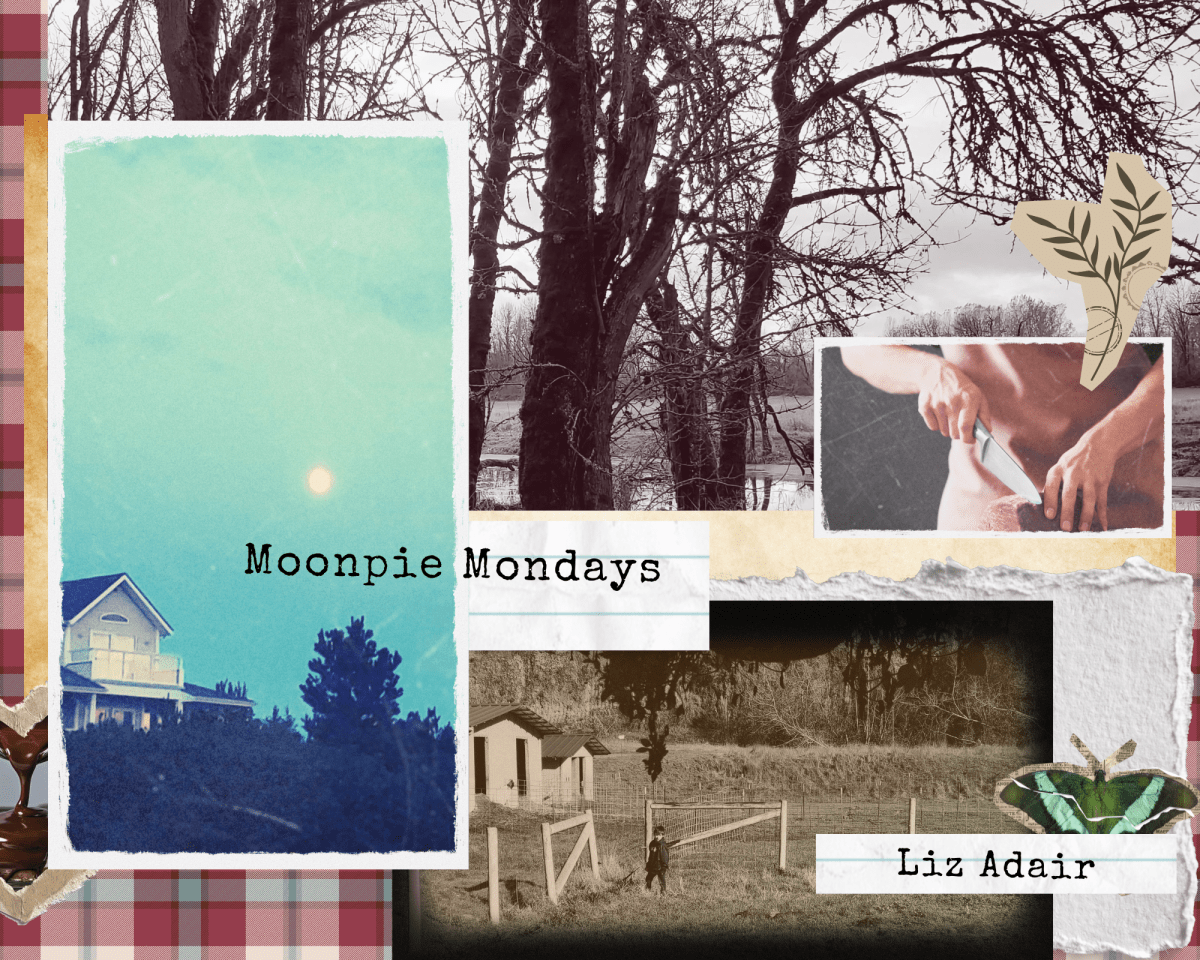
Moon Pie Mondays
Moon Pie Mondays
Liz Adair
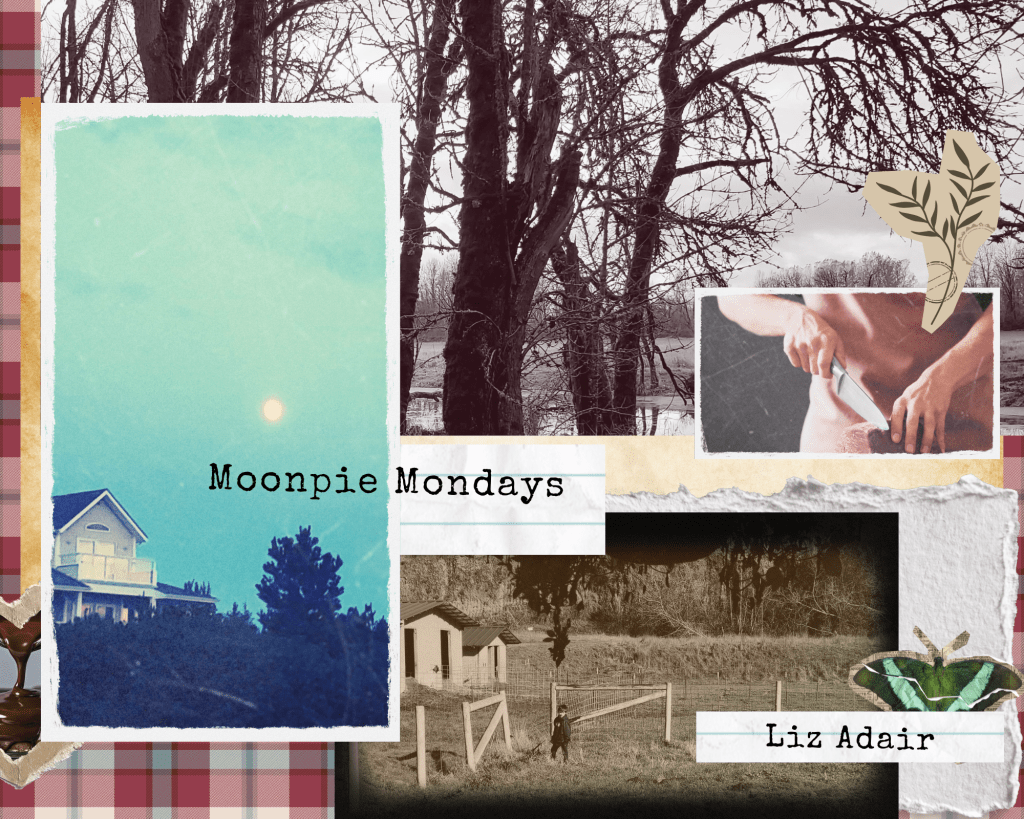
Every Monday, he took half a watermelon, one grilled T-bone, and an unwrapped moon pie to the dead man’s land between wood and yard, where the green sod grass gave way to brown loblolly needles under the shadow of the pines. It was Jack’s job to leave the offering. He’d been doing it all summer, ever since his Mom dropped him off on his grandparents’ doorstep without so much as a see-ya-later-Jack.
It had started with a frantic call to 911. It was just something to do while his Mom slept, an innocent way to pass the time—until three officers busted into their apartment to find a lonely boy, no fire, and no dead body. There were other incidents—a series of videos and a fake gaming profile, but the 911 call was the catalyst. For that, the cops fined his mother hundreds of dollars she didn’t have. For that, Jack’s Mom took his phone and computer. For that, she drove him out of the city and left him to his grandparents’ mercy.
His grandparents’ house, and the small farm attached to it, was dark, with no neighbors and no cell service. They were backwoods people who didn’t even own a computer. Jack had no way to talk to his friends. He couldn’t even call his Mom. The place was a dead zone.
Jack bemoaned this fact to his Grandma over dinner on the very first night of what he called his “inglorious exile from the real world,” and his Grandma laughed in that polite way that an old person does when they do not care about your problems because they have real problems, like the price of eggs and broken air conditioners.
“Oh, Jack, don’t be silly. This is the real world.” Beside her, Grandpa nodded, dully and dutifully. Jack didn’t think he’d ever heard Grandpa utter more than a single word at a time, so this was not unusual.
“But there’s nothing to do here. It’s so boring,” Jack whined. When he saw Grandma’s eyes light up, he knew immediately that he had made a mistake.
“Oh, well, if you’re bored, then I have a dozen chores that need doing. In fact, it is Monday. Isn’t it, Bob?”
Grandpa nodded. “Yup, sure is.”
Grandma clapped her hands together, almost giddily, “Well then, I’ve got a job for you.” She stood from the table and disappeared behind the wooden saloon-styled doors that separated the orange wood-paneled dining room from the kitchen.
She came back with two red-lidded tupperware containers, and a single, unwrapped chocolate moon pie. “It’s dusk now, so you better get a move on,” she said. “Take this to the mouth of the woods where the sunlight is swallowed by the shadow of the pines. You’ll see what I mean when you get there.”
Grandma and Grandpa both stared at Jack expectantly, but he didn’t move. He was sure he’d misunderstood. “You want me to…leave this plate of food in the woods?”
“No, of course not,” Grandma said, “we want you to leave it at the mouth of the woods, like I told you.”
“Seriously?” Jack demanded, “is this a joke?”
“No, son,” Grandpa said, gravely.
“Now, get on with you. Monday at dusk. That’s the way of it,” Grandma started to wave him on, but then she hesitated. She considered Jack for a moment before adding: “Leave the food, but don’t stay too long. Promise me you won’t.”
Jack promised, and he left the food where his Grandma said. The next morning, when Jack went to retrieve the tupperware, he found it stacked where he had left it, and cleaned. This continued all summer. Monday would come round, and Jack would be sent out at sunset with the food: a T-bone, half a watermelon, and a moon pie. Their own dinners were never so rich. They ate vegetable stew, beige casseroles, or beans with bacon. More than once, Jack considered eating the T-bone himself, desperate to taste something other than beans and mayo and mushy white bread. His grandparents ate without commenting on taste or flavor. The only time he saw them open the spice cabinet was to season the T-bone. Jack couldn’t make sense of it, so one night, about two weeks after Jack had arrived, he broached the topic over a bowl of yellow slop his Grandma called chicken casserole.
“Grandma,” Jack said, pricking at the casserole dregs with the prongs of his fork. “Why don’t we ever eat steak? Or the moon pies?”
His Grandma’s fork clattered to the table, and she stared at him, eyes wide. “No! We must never do that. Never.”
Her voice was high-pitched, strained. It scared him. “But why?”
“Boy, you best listen to me,” it was Grandpa who answered, in a stern, angry voice. “This is our family’s burden, and you have to carry it now.”
So, Jack carried it. Every Monday, he took the offering to the mouth of the woods, where the pine shadows were long and ever-present. He called this “feeding the beast,” and it was both his favorite of the farm chores, and the strangest. Jack placed the goods at the cusp of darkness, the elbow of needle-leaf undergrowth where the woods bent inward, and he waited. Some days, he left quickly, feeling watched and uneasy. Other times, he lingered and peered into the darkness, trying to see what lived there.
The rich scent of fresh steak made his mouth water. Even through the heavy plastic, he could smell the meat and the spices, the fragrant herb butter—but Jack never touched it. He didn’t want to get in trouble. He had made some mistakes, but Jack never meant to hurt anyone. “I want to be good,” he’d told his Mom the day she dropped him off, “I just don’t know how. I’m trying. Please, don’t leave me here.” His Mom had not been moved, but Jack was a good boy at heart, and he tried to listen to his grandparents. He tried to do the right thing. If I do what they say, maybe I can go home, he thought.
The truth was that Jack had thought this way long before coming to the farm. For a long time, he’d made trouble, and for an even longer time, he had tried not to. As a boy, when his parents argued, he thought: if I am good, maybe they’ll love me. And when his Dad left, Jack thought: maybe he’ll return home, if I act better. And as his Mom drove away, he couldn’t help but think: if I am good, she’ll come back for me. But Jack was never good, and no one ever came back.
On his tenth Monday living at the farm, Jack found the photograph. It was an old one, nostalgic and orange, printed on a thick square of yellow cardstock. In it, he recognized his Grandma, Grandpa, his Aunt Marie, his Mom, and himself. The boy looked like him, so much so that Jack almost couldn’t believe it. The shape of the face, the thin mouth and sharp nose, and something in the eyes. Something dark and deep, a longing that Jack recognized as his own.
“Oh my,” his Grandma said when he showed her the picture, “It’s been so long—where did you find this?”
I don’t remember, Jack realized, unsettled. When he woke, the photo was in his hands, sticky with sweat, but he had no recollection of how it got there. I must have found it last night, but why can’t I remember? Jack’s stomach churned.
His Grandma lovingly traced the boy’s face with her forefinger. “He was a sweet boy. You do look a bit like him. My son, your mother’s younger brother. He was the youngest of our three.”
“I don’t have an Uncle,” Jack said, confused. His Mom had never mentioned a younger brother.
“No,” his Grandma said, tucking the photo into her apron pocket, “no. You don’t. He’s been gone a long time.”
“What happened to him?” Jack’s heart hammered in his chest. He feared her answer.
His Grandma looked away, unable to meet Jack’s eyes. Her lips trembled, and in a sad, broken voice, she said, “He was just so lonely, Jack. So lonely. It ate him alive.”
That night, alone in his bed, Jack thought about the photograph and his Uncle’s unsmiling face. There was a clawing, empty feeling in Jack’s belly. The feeling had always been there, he remembered, even when he was young. It had grown worse when his Dad left, and living on the farm, it had grown stronger still. Every night, he could feel it gnawing at his heart. At first, he thought it was hunger. But it wasn’t. It was the longing. Loneliness. Emptiness. He had a pit of shadows in him, dark and unending, and he needed to fill it. But with what?
Jack tried to fill the pit. He put his all into the farm chores. He talked to his Grandma about needlepoint, and he learned how to drive a stick shift. He wrote and mailed letters to his friends, though he had to go to the library 40 minutes away to check his school email for the addresses. Jack tried looking for more photos of his Uncle, but he didn’t find any. There were hundreds of old pictures of his Mom and her sister—but his Uncle was nowhere to be found.
Stranger still, when Jack asked his Grandpa about it, the old man hadn’t known what he was talking about at all.
“What boy?” he demanded. “I never had a son.”
“But Grandma said—”
Grandpa pierced him with a long, unnerving stare. “I said I never had no son. Must’ve been someone else in the photo.”
But Jack didn’t give up easily. “Why would Grandma lie? Who was that boy?”
“How should I know?” Grandpa asked. “Maybe it was you. You say he looked a bit like you.”
“But I’m not old enough. My Mom was a kid in the picture.”
His Grandpa only shrugged. Grandma refused to talk about his Uncle again, and even at the library, Jack found no proof the boy had ever existed. In desperation, he mailed his Mom a letter, asking about her brother—but she never responded. He even tried sending a letter to his Aunt Marie, but it came back with a return to sender notice. The address was wrong, even though his Grandma had sworn it was right.
One cold morning, Jack woke to darkness and whispers. Soft, strained words slipped through the dark and came to him from the hallway beyond his room. He heard his grandmother’s tremulous voice first: “Oh Bob, the payment. I just can’t. Not again.”
“We knew the cost,” his grandfather said. His voice was pitched so low that Jack could barely hear him through the thin, old walls of the farmhouse. “We knew when we came here, when we took on the debt.”
“It’s not right,” she replied.
“A good man pays his debts,” Grandpa said.
“It’s not right,” she said again, louder, “I won’t do it again.”
“You will,” Grandpa said, “and so will I. Again and again, forever. As it has always been, so will it be again. It is the same, Nora,” he continued, “don’t cry over what’s already done. He is the same, and this is his place, his due. Deep down, he knows.”
The words confused Jack, who laid in his bed for hours trying to puzzle them out. His grandparents were in debt. That wasn’t so unusual. Lots of people had debts. But what kind of payment did they have to make? He imagined all the horrible things his Grandma and Grandpa must have done to make their payment—they didn’t eat much. They always wore old, threadbare clothes that were decades out of fashion. Then his mind took darker turns. What if his Grandma had to sell herself? His Mom never liked to talk about her childhood on the farm—maybe she’d been made to work for money in horrible, unimaginable ways. And there was something else, something that nagged at Jack: his missing Uncle. Had they sold him too? Had they done some black-market adoption, sold him to some cruel person?
No matter how much he turned it, Jack couldn’t make sense of his grandparents’ early morning whispers. Things on the farm went on as they always had. Jack settled in well and tried not to think too much about his missing Uncle or his family’s debt. Everything was fine, except for the dreams. Every night, Jack looked into a huge, dark mirror. It was black and smooth, stretching below him in all directions. From every angle, he could see himself—lanky legs with sneakers, his hands with dirty nails bitten to the quick, his face, pale as the moon. Every night, he reached a hand towards the glass, wanting to feel its smooth, endless surface, and every night, he woke before he could.
With all the strangeness going on, “feeding the beast” had become Jack’s solace. It was a simple, peaceful chore, always the same, undeviating, and that gave him comfort. At first, Jack turned back as soon as the offering was laid down, but as the weeks stretched on, something changed. Jack began to linger at the mouth of the woods. He watched and waited. Jack could feel the thing beyond the shadow, and he knew that it watched him back. It’s waiting for me, he thought. He stopped asking about his Uncle. He stopped questioning what they were feeding and why—and wondered instead what it would be like to eat moon pies in the dark.
The dream changed too. Now, when he reached out, his fingers found water. It wasn’t a mirror at all. It was a pond, and when he dipped his fingers into the liquid, a thousand ripples extended in every direction, and in every ripple, there was a boy with his face. A hundred boys stared back at him. A thousand versions of Jack drowned in the darkness. The light dimmed, and the clear pond became opaque, filmy. The faces disappeared, one by one, until only Jack remained, flanked by an unending forest of pine shadow. Then his face vanished too, sunk to the depths, given to whatever lived below the surface.
The dream scared him more than anything. The dreams were somehow worse than the photograph or the whispers, stranger than the moon pies and T-bones on Mondays. Jack thought about leaving the farm, catching a ride back to the city, but he couldn’t bring himself to run away because of a bad dream. His grandparents would be worried, and his Mom would be so angry that she’d never let him come back home. Just be good, Jack, he told himself. Just be good. More and more, Jack looked forward to his Monday chore. He was drawn to the mouth of the woods and felt comfort there. He had always felt out of place in the city, alone in the apartment with only his Mom for company, and he felt lonely on the farm too. But when he sat at the mouth of the woods and stared into the shadows, he felt peace.
It happened so slowly that Jack didn’t notice at first. His fear gave way to fascination, and he forgot what he’d promised his grandma that very first Monday. He sat long hours in the dark, talking to the thing beyond the shadow. It was nice to have someone to talk to. It never talked back, but it listened. He knew it did. Just like he knew, or at least suspected, that the real world existed in the darkness, and the thing beyond the shadow waited for him there.
It has always been waiting for me. Jack had lived on the farm for so long that he was beginning to feel like he’d always lived there. His Mom, his friends, the apartment in the city— all seemed worlds away, a time and place apart from him. Had any of that life really happened? Had Jack ever existed at all? He wasn’t sure. All that mattered was the world beyond the shadow, and the things that listened to him in the dark. The dreams stopped. Everything stopped. Jack’s worries faded away while his grandparents watched, uneasy and knowing. Jack craved meat. Jack stared at the moon with hunger.
They will not sacrifice me, he knew. Jack had begun to suspect their purposes, and they thought it would be easy, now that the shadows lived inside him again. He remembered. Staring into the mouth of the woods, he’d learned the truth. He had lived the lives of a thousand Jacks, murdered in their beds, butchered and given to the pine shadows as payment.
As it has always been, so will it be again, his Grandpa had said. But Jack would be no one’s payment. I will prove him wrong. Jack stopped sleeping. At night, he watched his bedroom door with wary eyes, expecting betrayal. Once, his Grandma opened the door. Moonlight streamed through the window, glanced off her glasses, and Jack saw her eyes—glistening with unshed tears, and the gleaming blade of a butcher knife clenched in her fist. But when she saw Jack was awake, watching—she closed the door and walked away. The shadows had driven all Jack’s fears away. Only truth remained. Truth, and the plan. They will not have me. Not this time. It would be different this time.
On his last Monday at the farm, Jack took the offering to the place where the pines yawned and the shadows lived under the trees. He sat cross-legged on the ground and lifted the red lids from their containers. He ate the steak with his bare hands. It was cooked rare and bloody, but he didn’t care. He let the pink juice drip down his face, and he gnawed the meat to bone and marrow. Then, Jack took the watermelon in hand. He ate it the same way, tearing into the red, glistening pulp with his teeth. He ate his fill, all the way down to the white rind. Jack saved the moon pie for last. He stood under the shadow of the pines and ate the whole moon in three bites. With his hunger finally sated, Jack walked into the mouth of the woods.

Liz Adair received her B.A. in English from the University of Alabama in 2016 and her MFA in Creative Writing from McNeese State University in 2020. Her poetry has been published in Strange Horizons, Diode Poetry Journal, Anti-Heroin Chic, and Jabberwock Review. Her fiction has been featured in Creepy podcast.
Notes from our Editor:
This wonderfully spooky coming of age story drew me in from the start. From something as simple as an offering, to family, to darkness, to being who you really are, the layering of this piece is astounding. I hope you find what I found, even if it’s just a good old fashioned Moon Pie.
Roxanne Skelly
–

The Sea Can Give and The Sea Can Take
Roxanne Skelly
The sea can give and the sea can take. Charlie Weber knew this deep in the marrow of his bones. As he walked up to Schumacher-Cordonnière Fishing Net Repair, freshly printed resume in hand, he hoped the ocean would give back some of what it had taken. It owed him. With the confidence of one who’d just crossed over into adulthood, he marched through the weathered door and peeled the help-wanted sign from below a hanging circled star in the window. The two desks in the dingy office were vacant, but he heard rustling through the open doorway in the back.
“Hello?” His youthful voice cracked. When nobody answered, he called out again, putting a touch more force behind his words.
“Be with you in a moment. Have a seat,” a woman replied, her voice uneven with exertion.
So he took off his Weber and Son Fisheries foul-weather jacket, smoothed down his scruffy, black hair, and sat in one of the uncomfortable folding metal chairs against the wall. His foot tapped in time with his racing heartbeat as he toyed with his smartphone. His father, clothed in his own foul-weather fishing gear, looked back at him from the lock screen. Charlie closed his eyes for a moment, remembering better times.
The wait wasn’t particularly long. Five or six minutes. And after, the woman emerged. She was pretty, in a willowy way. Maybe mid-thirties, with long brown hair and big eyes. Most striking, she was pregnant. Very pregnant. Her extended stomach looked strange on her lithe figure.
She wiped away the sheen of sweat on her brow and removed the leather gloves she wore. “So, what may I do for you?” She paused a moment as she studied him, then added, “Young man.”
He stood, then adjusted his worn peacoat. “Uh, hi ma’am. Charlie Weber. I’m here about the job?” He stepped forward and held out his hand.
“Charlie. You’re Bill’s boy, aren’t you. He was a good man.” By reflex, she shook it as she frowned. “Francine Cordonnière. Call me Francine.”
She directed him to another folding chair by a desk. It made a screeching noise as Charlie pulled it back, but Francine didn’t seem to notice. She lowered herself slowly, wincing, into an office chair. As she relaxed into it, she took a deep breath and blew it out like she was inflating a balloon.
“So, Charlie, tell me about yourself.” She leaned forward and took his offered resume, then placed it in an inbox on the corner of her desk, sight unseen.
“Well, uh, I guess I’m looking for my first real job. Just graduated from Aberdeen High. I worked with my father for a while, doing odds and ends around the boat, but, well, Mom said I needed to contribute more to the family if I wanted to stay at home. Things have been tight since…” Charlie still couldn’t say it. Even a year later. “I have a car and won’t have any trouble getting here. I’ve no problem working mornings or evenings, and I can come in on weekends. Whatever you need. I’m a hard worker, Mrs. Cordonnière, really. I could use this job.”
Francine narrowed her eyes and studied him. “Why would you want to work here?”
“I don’t know. I’ve always liked the sea, and I wanted to work someplace where I could help the fishermen around here. None of them are taking on greenhorns right now. You know how it is.” Charlie grimaced.
Francine gave him a pained smile. “Not so many fish these days, with the climate and all. But there are enough boats, and they all have nets in need of repair. You’d help around the shop. Carry nets from the back, package them up, help customers load them, that type of thing. I can’t do it anymore.” She glanced down at her abdomen.
Charlie followed her gaze and nodded.
“Pay is one dollar over minimum. Be here at eight-thirty tomorrow morning. It’s hard work, but honest work.” She held out her hand.
Charlie lit up, a big smile crossing his face as he shook her hand. “Thank you, Mrs. Cordonnière. You won’t regret it. I mean it.”
As he walked to his old Toyota in the parking lot, he puffed out his chest. His first proper job, doing hard work. Honest work. He wouldn’t screw this up.
#
Charlie spent the next few weeks working mostly with Mrs. Cordonnière’s wife and business partner, Vivian Schumacher. Vivian was a large, muscular woman with striking red hair and a jovial smile. She had a penchant for wearing button-down, plaid, flannel shirts when she wasn’t bundled in a foul-weather jacket. Charlie thought she looked like a lumberjack, minus the beard, but he couldn’t help but like her. She reminded him of his mother.
There was always plenty of work to do. The fishermen from Aberdeen brought in their nets, which he lay neatly in piles in the steel building behind the office. Every afternoon, as instructed, he would place one over a fence-like rack out back of the building. Sometimes, he would pause after stringing up the net and stare out at Grays Harbor, fifty feet down at the bottom of the bluff. The water soothed him. The white-capped waves, the fishing boats coming and going, the dredge. So much activity in this little pocket of safety feeding into the Pacific.
One morning in late November, the boats cleared from the harbor. The whitecaps became more pronounced, and the sky grew dark. Clouds blew in from the ocean on a nor’wester, and the wind picked up, sending debris into the air.
Charlie peered out of the window in the rear of the building. “Mrs. Schumacher, should we really lay a net out today? The storm is looking worse.”
Vivian frowned. “We must. Every day. It’ll be fine.”
So Charlie hefted a gillnet into a cart and opened the large door. Wind scattered stray papers and threatened to overturn the cart, but he pushed it out anyway. He was a hard worker. An honest worker.
He took three times longer than usual to string up the net. He fastened it to the rack with twice as many ties. By the time he’d finished, the sky was dark, and rain stung his face. The large garage-style door groaned under the load as he watched it close, and after it was secured, he could still hear the maelstrom outside.
“Good kid.” Vivian slapped him on the shoulder when he entered the office. “Quite the blower we have out there.”
“You sure you’re going to be able to fix the gillnet tonight?” Charlie was skeptical, as was reasonable given the weather. But the nets were always fixed when he arrived the next morning, which had initially dumbfounded and amazed him. Now it was just part of his life.
“Don’t you worry about that. Be here in the morning. This should blow over quickly.” She pulled a cold can of beer from the fridge in the back of the room, popped the top, then took a sip.
Francine glanced up from her computer. “Might be a long night. Trees down across the one-oh-nine west of here.”
As she spoke, the lights flickered.
“Shit,” Charlie whispered under his breath, then said aloud, “How long until they clear them?”
She shrugged. “You should stay with us tonight. They’ll most likely have it cleared in the morning. We have a cot in the loft. I’ll get it ready for you.” She groaned as she pushed herself up from her chair.
“You’ll do no such thing, love.” Vivian placed her hand on Francine’s shoulder and guided her back into her seat. “I’ll take care of it.”
Francine lay her hand on her wife’s and smiled. “Okay, then I’ll microwave us some burritos. You two must be hungry. It’s been a long day.”
At that, Charlie’s stomach rumbled, and he nodded vigorously.
Ten minutes later, he was shoveling beef and beans into his mouth at Vivian’s desk. She put a beer next to his plate, then placed her finger to her lips. He raised his eyebrows, questioning, but opened it and took a sip, grimacing.
As they quietly finished their meal, the lights flickered and went out, leaving them alone in darkness with the storm screaming outside.
#
While the storm raged, they played poker and told ghost stories in the office under candlelight until exhaustion threatened. Vivian stood and held out her hand to Francine. “It’s time we got you to bed, my love.”
Charlie rose as well and offered his hand. Francine took both and hefted herself out of the chair. She gave Charlie a light hug. “You’ll be safe out here. Just do what you can to stay warm. There’re more blankets in the trunk next to the cot.”
With that, the two women wrapped themselves in rain gear and rushed through the tempest to their home, a cozy trailer beside the shop. Charlie, now alone with the heavy weather and his thoughts, climbed the steep stairs to the loft and lay back on the cot. But he couldn’t sleep. Not with the maelstrom outside, and the clammy air cutting into his bones. The two blankets he’d retrieved from the trunk did little to warm him against the chill.
At two in the morning, he decided to stretch his legs. He carefully descended the stairs, holding his phone aloft for light, and walked around the nets piled in the center of the steel building. Lightning flashed through the windows and a few seconds later, a rumble reverberated throughout the building.
He waited for the next flash, then counted aloud. “One Mississippi, two Mississippi, three Miss…” A half mile. Close.
The sound of the rain against the metal roof turned hard and sharp. Hail. He grew concerned about the net out back. Surely the wind and the hail and the rain would be too much, despite the strong nylon.
He peered out the window and saw nothing in the darkness. Another flash, and he made out the rack with the net. Two figures, frozen in time by the lightning, huddled at the net.
Charlie’s heart raced. Francine and Vivian.
Without a second thought, he opened the door and rushed out. The hail stung, the cold cut through his sweatshirt in seconds, the wind whirled around him like a wild animal. He leapt down onto the gravel driveway, ignoring the pain he felt through his sock-covered feet.
With only the light from his phone to show his way, he raced to the grass, then froze.
Two men worked on the net. They were covered in foul-weather gear, complete with red sou’wester hats, waterproof pants, and rubber boots. Long streamers of kelp were draped over them, snapping back and forth in the heavy wind.
“Hey!” Charlie yelled and waved his phone. “Hey, what are you doing?”
They continued to work on the net, shuttles flying back and forth.
Charlie stepped closer and closer, then slipped on the slick grass and fell. He scrambled to his phone, a few feet away, and turned the light on them once more. One figure stood and twisted at the waist in a very unnatural manner. He glared at Charlie with empty sockets where his eyes would be.
Skull was visible through rips in the figure’s face. A small crab hung from a scraggly beard. The apparition’s ungloved hands were wrinkled and shedding skin to reveal bone.
The figure slowly turned back to the net, knelt, and continued weaving the shuttle back and forth through the crisscrossed lines.
Charlie watched, both scared and enraptured by the skill with which they did their work. Bit by bit, they replaced the torn lines. Knot by knot the net became anew, strong and ready to capture more of the sea’s harvest.
As the chill finally pushed past the adrenaline racing through his veins, he scrambled awkwardly up. He raised his hand to his mouth. “Thank you!” He could think of nothing else to say to these nighttime visitors who were keeping Vivian and Francine’s business afloat.
The two figures stood and turned toward him.
Recognition. The Weber and Son foul-weather jacket, the red sou’wester, the way the figure held himself. Charlie’s heart pounded.
“I miss you,” he whispered.
His father raised his hand in reply. Slowly, bits of his jacket, pants, and flesh melted away. Soon, all that remained was a hat and a pile of kelp.
Charlie stood, hands at his side, mouth agape, until he mustered the courage to retrieve the sou’wester. The cold drove him back into the building. He stripped off his wet clothing and laid it out to dry, then wrapped himself in the blankets and shivered through the night.
#
Morning broke with a beautiful blue sky. The storm had passed hours ago. Vivian and Francine arrived at the shop to find Charlie placing a net, repaired and folded, neatly next to the others from the previous nights.
“Been up long?” Francine called to Charlie, then yawned.
“Not long. Just finishing up last night’s work.” He brushed the dirt and seaweed from his hands and smiled at them. “Quite the storm.”
“Certainly was.” Vivian joined Charlie at the nets and pushed the one he’d dropped with her foot. Her brow wrinkled. “Hmm, work’s good, but something is off.”
She crouched down and rolled the lines between her fingers. She tested the strength of the knots. She unfolded the net slightly and pulled on the eyelets used for the floats and weights. All the while, she chewed her bottom lip, a nervous habit.
“Knots are left-handed. And the repair was done with…” She glanced up at the spools of nylon hanging in racks against the wall. One spool was missing.
“Looks fine to me, hon.” Francine placed her hand on her wife’s shoulder.
Vivian squinted at Charlie, who merely shrugged and held up his hand. “Leftie. Guilty.” Then he yawned. It had been an early morning, finishing the repairs left by those poor, tormented souls. He wasn’t as fast as them, but he had managed.
“But they should have…” Vivian sputtered.
“I thanked them for a job well done and they moved on to where they needed to be. Finished the work this morning, after the storm. I hope it’s okay.” He felt a little guilty, seeing the pained look on Vivian’s face.
She fell to her knees. “How could you? We’re ruined.” She squeezed her eyes shut, hoping to stem tears of frustration. And a little fear.
“Viv, hon, we’ll be fine.” Francine soothed. “Charlie, where’d you learn to mend nets? This is good work.”
“My dad taught me before the sea took him,” he said in a monotone voice. He still hadn’t dealt with the loss. Last night had helped, though. Despite the storm, there had been peace. For his father and for him.
“I’m sorry.” Francine stood and did her best to stretch. “Viv, we may need to raise our rates. The young man needs a fair salary if he’s going to take on the net repairs. Will you, Charlie?”
“Yes, ma’am. I’ll do a good job.” Charlie proudly puffed out his chest. “No thanks necessary.”

Roxanne Skelly (MFA ’24, Genre Fiction and Screenwriting) predominantly puts her efforts into queer speculative fiction, although she’s been known to stray into other genres. When not writing, Roxanne spends most of her time building virtual worlds.. She lives in Seattle with her wife and she’s very familiar with rain.
Latest Posts
-
“Sunshine Girl” The four claustrophobic walls of a motel room can make for a prison, and for Lotty, the protagonist, they certainly do. That confinement set the stage for a wonderful story about freedom, and what lengths people will go to for it.
-
Where They Hanged the Witch Named Maeve Stephen Thorn They say the thunder rumbled low Like a soft, foreboding drum And the sky was colored like watered-down wine Warning of something to come According to the stories they tried her here Away from the houses of town And a wagon with two shaggy horses stood…
-
Moon Pie Mondays Liz Adair Every Monday, he took half a watermelon, one grilled T-bone, and an unwrapped moon pie to the dead man’s land between wood and yard, where the green sod grass gave way to brown loblolly needles under the shadow of the pines. It was Jack’s job to leave the offering. He’d…

